
Fifteen senior people, eight countries
Rampiq sells two things to B2B SaaS and IT companies: search programs that build organic pipeline, and LinkedIn campaigns that convert it. The firm runs out of Arlington, Virginia, with more than fifteen senior people spread across the US, Portugal, Italy, Czechia, Poland, India and Sri Lanka, and nobody junior on delivery. Most clients buy one of the two services and add the other within a year; almost nobody buys a single project.
That shape decides how everything below reads. A small senior team holding a lot of accounts is a good margin business right up until something adds hours per client, at which point it is a bad one. Retention above 90% in 2025 means the same accounts renew, so an hour added to a client in March is an hour added every month after it. Any new service line has to arrive without a hire behind it, or it is not a service line — it is a favour with a name.
What Rampiq could describe but not show
Clients were asking about AI search before the agency had anything to answer them with. The questions were specific — why does ChatGPT recommend three competitors, where is that answer coming from, what do we do about it — and the honest reply was a description of how retrieval works rather than a look at the client’s own position inside it. An agency can hold that conversation once. It cannot put it in a proposal, because there is nothing on the screen to point at, and a category where every competitor is saying similar things about AI rewards whoever can stop talking first.
What the first measurement showed was less a ranking problem than a sourcing one. The engines were not short of material on these categories; they were reading it somewhere other than the client’s own domain, and a competitor’s page was often being quoted closely enough that you could see which paragraph had been lifted.
That settled where the tool had to sit. If the useful facts were the prompts a buyer actually types, the sources behind each answer, and the specific competitor page being quoted, then none of it belonged in a monthly report at the end of an engagement. It belonged in the first conversation, before anyone had signed anything.
The audit goes into the call, then into the project
Rampiq did not add a tool to the end of its delivery process. It put one at the front, and the same prompts travel the whole way through — pre-sales, onboarding, delivery and reporting are four views of one record rather than four documents.
01 · Pre-sales
The audit is the first thing in the room
A prospect’s brand goes on the platform before the sales call, and the call is built around what comes back: the prompts their buyers type, where the brand sits in the answers, who is cited instead. The plan that falls out of it touches development, website and content work at once, which is the part Kiseleva says makes it straightforward to sell — nobody is being asked to buy a theory.
02 · Onboarding
Audit into project, without retyping anything
When a prospect signs, the audit becomes the project instead of being filed. Everything gathered from the day the brand went on the platform carries forward — prompts, competitor set, cited sources — so the sales conversation and the delivery kick-off are one record at two points in time. Rampiq’s strategists then rewrite the prompts against the client’s business goals and group them by topic, which is what stops the platform reading as a generic tracker.
03 · Delivery
Reporting by the prompt groups the client argued for
Amadora AI sits inside Rampiq’s AI visibility program as the reporting layer. Clients see movement by prompt group — visibility score, share of voice and citation count against the topics that map to their own goals — rather than one number for the brand. Citations are tracked across the engagement, so a client can see which sources began quoting them and when.
04 · Competitive intelligence
What the engines are quoting from a competitor’s site
The part Rampiq uses hardest is competitor citations: not that a rival is being named, but which of its pages the engines are pulling from and what exactly they are lifting. That feeds two work streams at once. It tells the content team which pages have to exist on the client’s site and what has to be on them, and it turns the citation list into a target list for link building, because the sources the engines already trust are the ones worth appearing on.
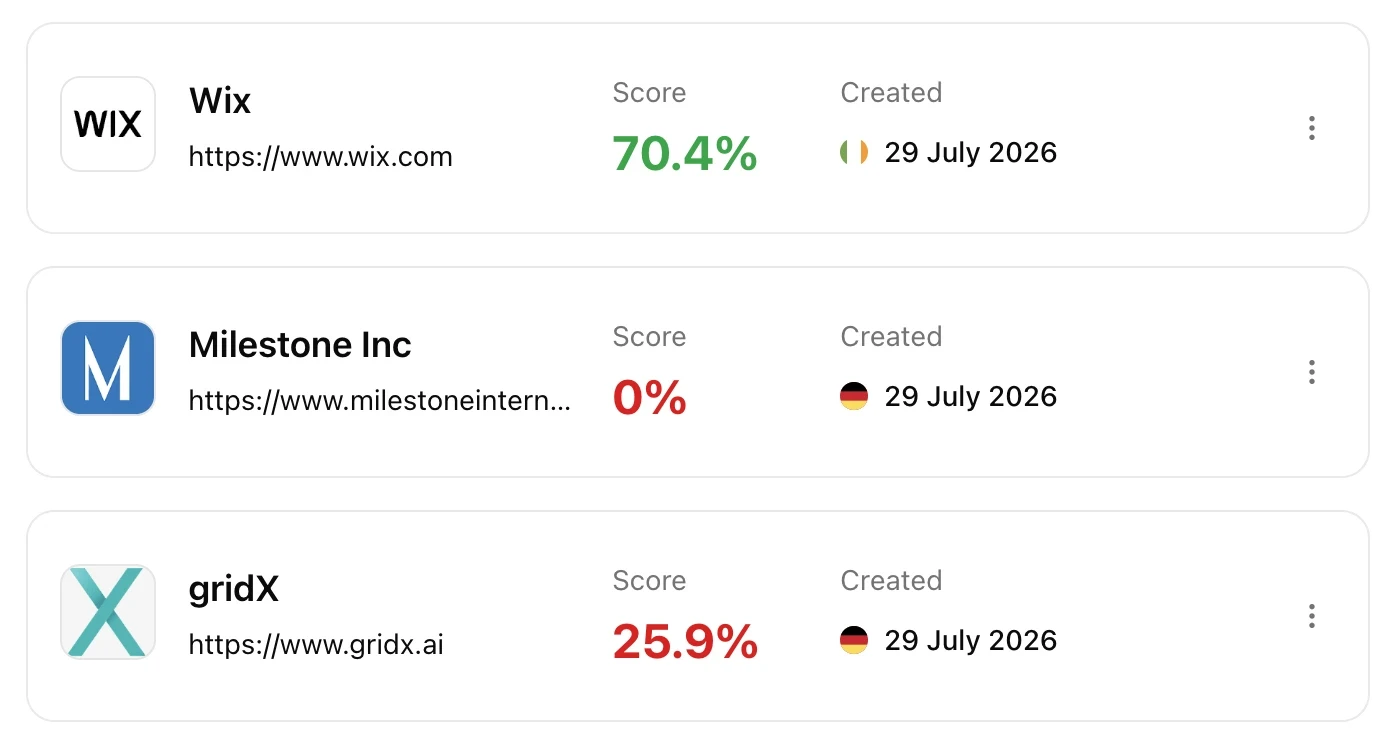
Two things did not change during the window. A Rampiq strategist approves the plan before a client sees it, and the prompt lists come from the account managers who sit on the sales calls rather than from a default set.
What the audit line is worth now
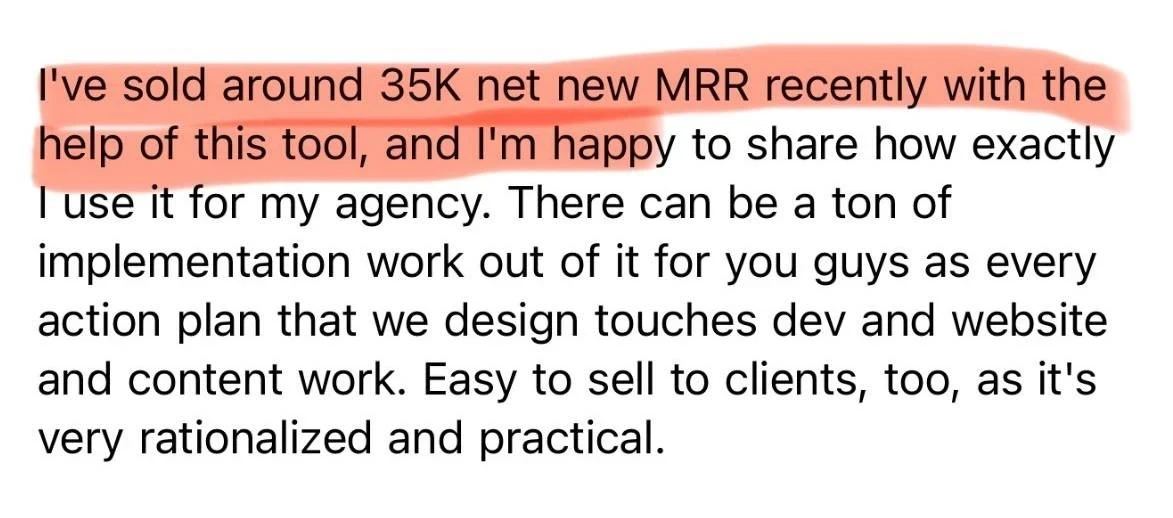
Over the four months that followed, Rampiq sold around $35,000 of net new monthly recurring revenue on deals where the audit was in the room. That is the agency’s own figure, from its own books, and not a claim about what the platform closed on its own — a Rampiq strategist ran every one of those calls and approved every plan that came out of them. The delivery team it came through is more than 15 senior people across eight countries, on accounts that renewed at above 90% through 2025.
The existing SEO and LinkedIn programs ran through the same period, so part of the number is expansion on accounts that were already open rather than new logos. What changed is where the AI conversation sits. It is now the first thing a prospect is shown, rather than the thing the agency explained for free at the end.
I've sold around 35K net new MRR recently with the help of this tool. Every action plan that we design touches dev and website and content work. Easy to sell to clients, too, as it's very rationalized and practical.
 Liudmila KiselevaFounder and CEO, Rampiq
Common questions
Where in the sales process does the audit actually sit?
Before the call, not after it. Rampiq puts the prospect's brand on the platform first and builds the conversation around what comes back — the prompts their buyers type, where the brand sits in the answers, who is cited instead. The plan touches development, website and content work, so the prospect leaves with a scope rather than an opinion.
Does anything have to be rebuilt when a prospect becomes a client?
No. The brand stays where it was set up during pre-sales and the audit becomes the project, so prompts, competitor set and cited sources all carry through. Rampiq's strategists then rewrite the prompts against the client's business goals and group them by topic before delivery starts.
How is competitor data used beyond a comparison chart?
Rampiq looks at which competitor pages the engines quote and what they lift. That decides which pages have to exist on the client's site and what belongs on each, and it turns the citation list into a link-building target list — the sources the engines already trust.
What did the software cost against the revenue?
$179 a month, covering unlimited client brands and unlimited seats. Rampiq sold around $35,000 of net new MRR over four months with the audit in the room. The audit is the part prospects pay for, and the subscription costs the same whether it runs one brand or thirty.
How much of this still needs a person?
The judgement. A strategist approves every plan before a client sees it, and the prompt lists come from the account managers who sit on sales calls. What the platform removes is the rebuilding — of the pre-sales story, the project setup and the monthly report.