Guide · GEO
How to Launch a GEO Service Line at Your SEO Agency: A 30-Day Rollout Plan

Launch a GEO service line as a 30-day pilot on one client you already have. Not as an agency-wide rollout.
GEO, or generative engine optimization, is the work of getting a brand mentioned and cited inside AI answers on ChatGPT, Perplexity, Gemini and Google AI Overviews. For your SEO agency, the launch runs four weeks. One outcome per week.
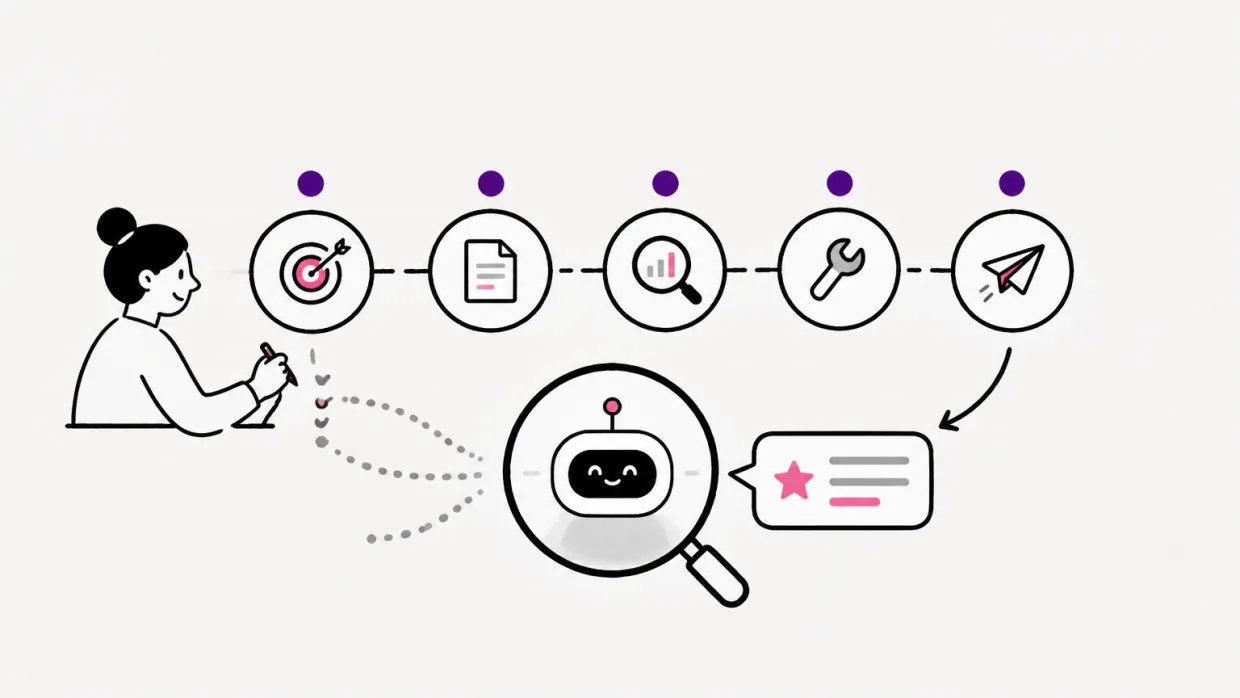
Week 1 is your baseline and prompt set. Week 2 fixes what the baseline found on the client’s own pages. Week 3 goes after third-party placement. Week 4 turns the numbers into a report, a price and a renewal decision.
Why a pilot and not a launch? Because the work is placement work. Placement takes calendar time you cannot compress.
Across 10,563 tracked AI citations in SaaS projects, blog articles and listicles carried 60–72% of all citations, and vendor-owned corporate sites held 79–85% of the citation surface.
But you are not writing your way in. You’re getting cited on pages you do not own.
Why agencies are adding GEO service lines now
Agencies are adding GEO service lines because the click-and-rank reporting their clients already accept is breaking.
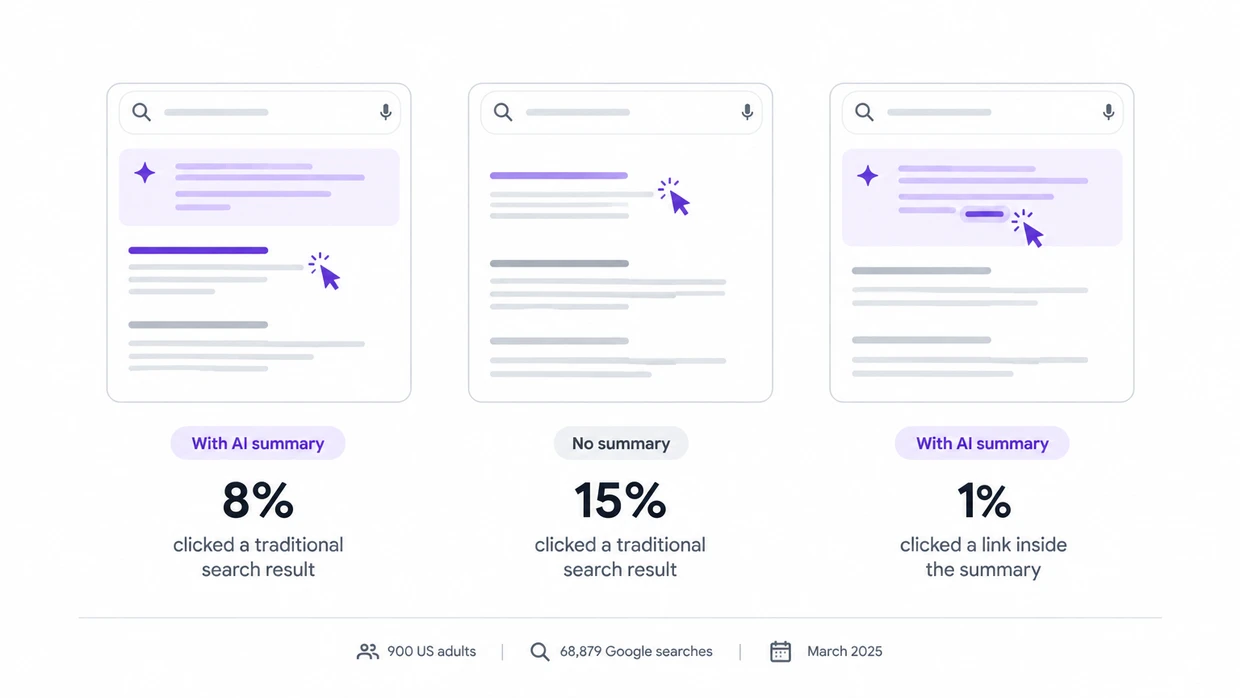
Pew Research Center measured the break. Google users who saw an AI summary clicked a traditional search result in 8% of visits. Users who saw no summary clicked in 15%. Clicks on links inside the summary itself ran at 1% of visits (900 US adults, 68,879 Google searches, March 2025).
A single AI reply is assembled from roughly 50–100 analyzed pages (observed across our tracked projects, not a controlled study). Engines avoid pulling twice from the same source, so at most one or two of those pages belong to your client. Your client can rank on one of them and still lose the answer.
But the sharper reason is commercial. Ask an assistant which platform to use for launching a GEO service line. The answer comes back assembled from vendor-owned roundups, because that’s most of what exists to cite.
Agencies run this play every month. Almost none of them publish the operating manual, so the citation surface sits open for whoever writes it first.
A GEO service line is a productized offering you sell alongside SEO: tracking a client’s presence in AI answers, then working to improve it. It’s a measurement layer plus a placement workstream that sits inside the agency you already have.
The 30-day GEO rollout plan, week by week
A 30-day pilot is the window you use to prove the line internally, on one client, before it touches your standard retainers. Baseline → repair → placement → report.
Week 1: baseline, prompt set, scope
Everything in week 1 exists to fix the measurement before anyone optimizes anything.
- Pick the client. One existing retainer, in a category where buyers actually ask assistants for recommendations.
- Build the prompt set. We build ours from the client domain plus up to five competitor domains. That gives you the ICP and the urgent buyer problems. Then validate each commercial topic against real keyword volume, CPC, difficulty and People Also Ask data. Guessing prompts is where pilots die, because no dataset of AI prompts with volumes exists to guess from.
- Strip the branded prompts. A prompt naming the client returns close to 100% visibility by construction. Leave those in and your headline score climbs on its own. Then it collapses the first time the client adds an unbranded one.
- Generate the baseline audit. Our own audit covers 12 prompts across ChatGPT, Gemini and Perplexity, returns in 30–60 minutes, and carries your agency’s branding.
- Write the scope. Name your deliverables and your reporting cadence. Do not name a target visibility score.
Week 2: fix what the baseline found
Week 2 looks like SEO because it is SEO.
Your baseline usually surfaces one of two failure shapes. Either the assistants cannot read the client’s site, or they read it and still do not trust what they find.
Check crawler access first. Then entity consistency: one company name and one description, identical everywhere the client appears. Then the pages themselves, rewritten so a single passage answers a single prompt without needing the rest of the page around it.
None of this needs a new team. Your technical and content people already do this work. They’ve just never been pointed at a prompt list.
Week 3: third-party placement
Week 3 is the part your clients cannot do for themselves.
Export the citation URL list for your tracked prompts. Treat it as a target list rather than a report, the same move a citation gap analysis makes. Because the citations concentrate in blog articles and listicles, the work is inclusion.
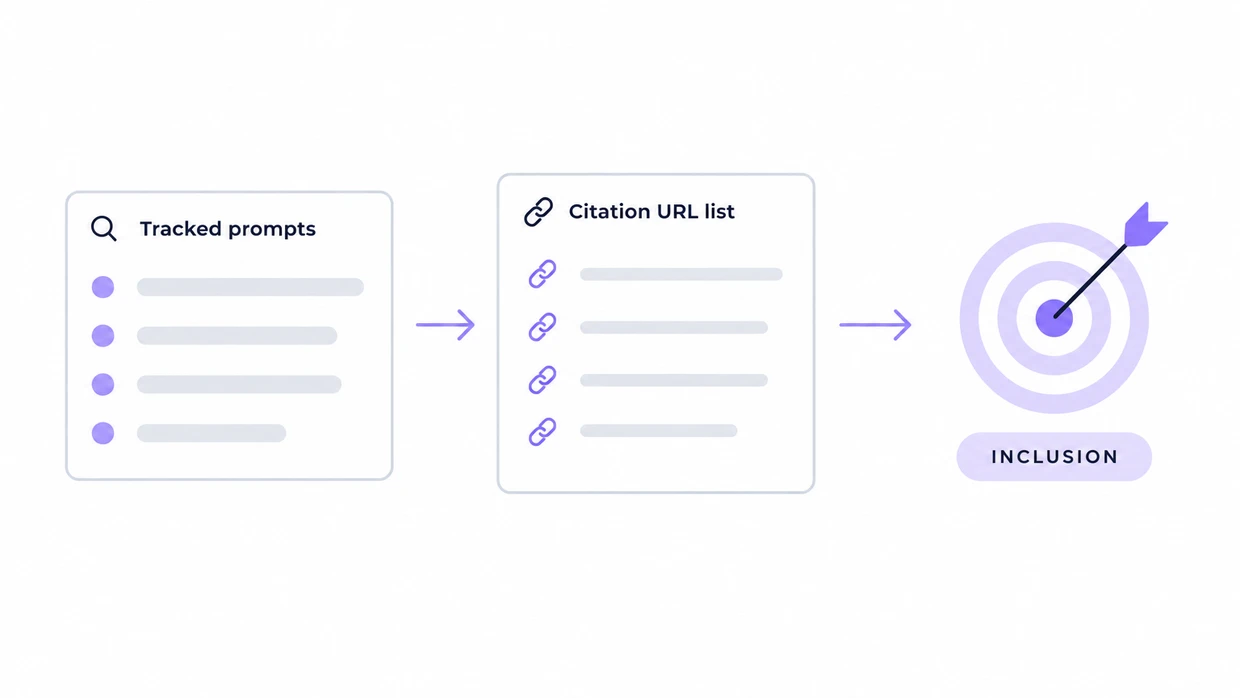
You’re getting the client added to roundups that already get cited, and finding or seeding the one community thread the engines keep returning to. Two placements that land beat twenty pitches that don’t.
Week 4: report, price, decide
Week 4 produces two artifacts and one decision.
Your report carries movement, not a grade. Show per-prompt and per-topic change week over week, because an aggregate score is trivially inflatable and makes a poor headline. Then attach a price to the line and ask for the renewal. A pilot that ends without a price attached was a favor, not a launch.
Setting up the service with automation
Workflow integration means plugging GEO tracking into the tooling and reporting cadence you already run, rather than standing up a second one. In practice, that usually means four scheduled jobs:
- Daily tracking of the client prompt set, across the engines you sell.
- Weekly alerting on new citations and lost mentions, routed to the account owner rather than to a dashboard nobody opens.
- Monthly reporting, exported into the client’s existing SEO report as one extra page.
- Quarterly prompt review, because buyer problems move and a prompt set goes stale.
Amadora AI is an AI search optimization platform: it tracks how often a brand is mentioned and cited in AI answers across ChatGPT, Perplexity and Gemini, then turns that tracking into prioritized optimization tasks.
Setup is not the hard part. Creating a project takes about five minutes, tracking runs daily on every plan, and Search Console data arrives through a native integration. Your reporting page largely assembles itself.
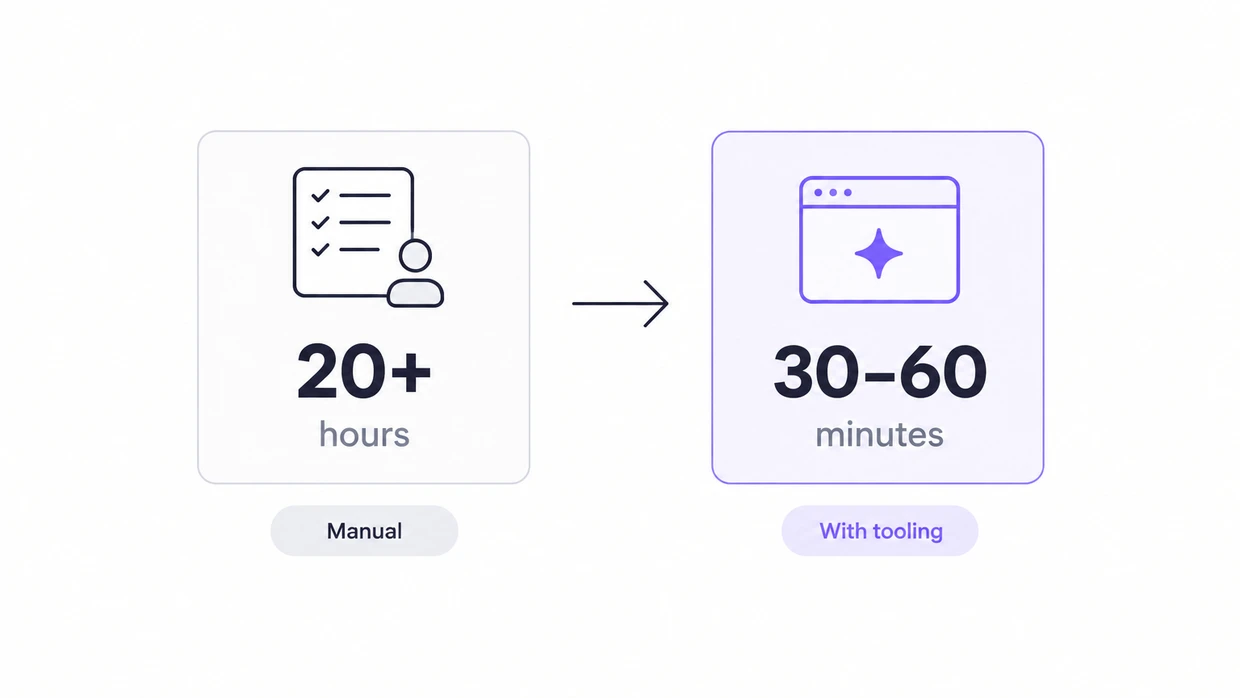
Doing it by hand is the expensive alternative. We estimate at least 20 hours to reproduce a full audit manually, against 30–60 minutes generated. Run that comparison once and the tooling line stops being a debate.
Google’s own guidance is blunt about what you can leave out of the scope. “You don’t need to create new machine readable files, AI text files, markup, or Markdown to appear in Google Search,” and “structured data isn’t required for generative AI search.” A page has to be indexed and eligible to be shown with a snippet. That’s the bar on Google surfaces, and it says nothing about ChatGPT, Perplexity or Gemini.
But some GEO packages bill for llms.txt files and AI-specific markup anyway, and a client who reads that documentation page will ask you about it.
Building your first GEO case study
No published case study of a GEO service line launch exists yet. Stop looking for one.
You build yours out of the pilot. The only thing that decides whether you can is whether you fixed the scorecard on day one. Fix these four fields before week 1 ends:
- Average position in AI answers across your tracked prompts.
- Prompt coverage rate, the share of tracked prompts where the client appears at all.
- Own citation count, how many of the client’s own URLs get cited.
- Brand mention count across every cited source.
Those four survive a client reading your report closely, because each one moves for a reason you can name. One agency reported a frontline employee communications client reaching 2.5 average position and a 25% prompt coverage rate across tracked engines, with 16 Reddit threads already cited on its prompts and mentions up from around four (one client account, reported to us, several months of work).
Read that as a shape rather than a benchmark. Your day-30 numbers will be smaller, and that is fine. The case study is the delta.
Write your report once, in the format you will reuse for every client after this one.
Pricing your GEO service line at agency scale
Agency-tier pricing is the gap between what the platform costs you and what your client pays for the line. Three structures work, and they fail in different ways.
| Model | How you charge | Fits | Watch for |
|---|---|---|---|
| Flat add-on to the retainer | A fixed monthly uplift on the existing SEO fee | Agencies with several mature retainers and no appetite for a new sales motion | No separate outcome line, so it’s the first thing cut in a tight quarter |
| Tiered by tracked prompts | Bands set by prompt count, engine coverage and reporting depth | Mixed books, where a local client and a mid-market client cannot pay the same | The client can estimate your wholesale cost by counting prompts |
| Fixed-scope audit | A one-off fee for a bounded diagnostic, sold on its own | Agencies reopening conversations with lapsed or new prospects | It does not renew, so it feeds the pipeline rather than the retainer |
Your cost side is small and knowable. Amadora AI’s agency-tier pricing plans start from $499 per month for 300 prompts across multiple client workspaces, with your branding on the reports. Spread across ten clients, that’s roughly $50 per client per month, and 30 prompts each against a recommended starting setup of at least ten.
The published market sits well above your cost. WebFX’s 2026 pricing guide puts agency GEO engagements between $1,500 and $50,000+ per month, and AI visibility tracking software between $50 and $1,000+ per month.
Does the audit route actually sell? One agency told us it closed about $35,000 in new monthly recurring revenue with the audit as its pitch asset (a single self-reported account, figure approximate). Agency customers have generated 30–50 audits at a time to re-engage lapsed prospects. That’s a possible outcome, not a promise.
But it is why a fixed-scope audit earns a place in your pricing conversation at all.
Integrating GEO into existing SEO retainers
GEO adds two things to the delivery process you already run: an input to your standing account meeting, and a page in your monthly report.
Where it slots in:
- Discovery and onboarding. The prompt set gets built alongside your keyword map, from the same business context.
- The standing meeting. Citation movement joins rank movement as a weekly input. Same meeting, same owner.
- The monthly report. One page: two leading indicators, plus the prompts that moved.
- Renewal. Your pilot report becomes the renewal document.
Why this matters: those two leading indicators carry more weight than any headline number. Own citation count moves with content and technical work. Brand mention count moves with digital PR. Both are attributable to something you did.
That’s why we report them, instead of committing to a visibility score that depends on your client’s niche and on whatever foundation they walked in with.
Fold the line into your retainer rather than selling it as an option. An option gets declined in the first bad quarter. For the platform side of that, see how Amadora AI supports agency GEO delivery.
Common questions
How many clients justify a GEO service line?
One, for the pilot. For the line itself, your platform cost sets the floor. A single agency-tier seat spread across five or six client workspaces already lands under $100 per client per month. Below that, your reporting template costs more to build than the line returns in its first quarter.
What if a client says AI search sends no traffic?
Agree with them, then change the measure. AI referral traffic is small and may stay small, because assistants answer rather than route: users clicked a link inside an AI summary in 1% of visits. Report presence in the answer itself instead, because that’s where the shortlist now gets made.
Can you launch GEO without hiring anyone?
Yes. The genuinely new skill is reading citation data and choosing which third-party pages to target. That sits with whoever already owns your off-page strategy, alongside the technical and content work week 2 needs.
How fast should a GEO pilot show movement?
Allow seven days before you read any trend, and thirty before you judge the line. Placement work lags, so an inclusion agreed in week 3 might not appear in answers for several weeks after it publishes. Report week-over-week movement in the meantime.